The Rise of Generative Adversarial Networks in Art
Generative adversarial networks (GANs) have emerged as a notable approach within machine learning for creating images, music, and other forms of media. Their introduction has expanded the set of tools available to artists and designers, enabling new modes of creative expression. This article examines the rise of GANs in the art world, focusing on the underlying mechanisms, training methodologies, and the ethical questions they raise. The discussion is intended to provide a balanced view of both the technical and conceptual dimensions of this technology.
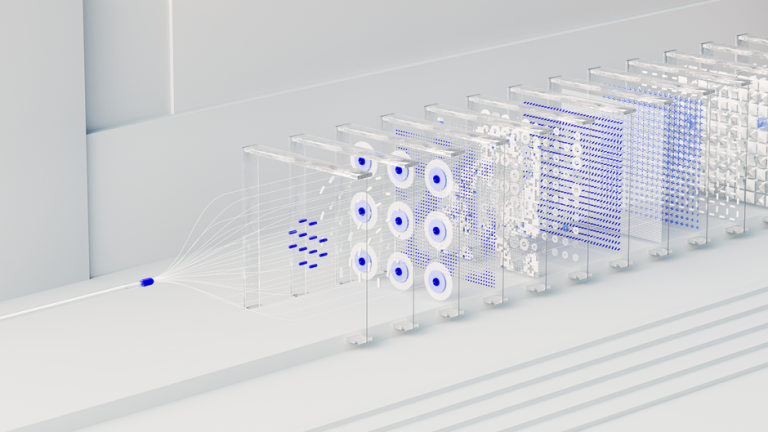
At their core, GANs consist of two neural networks—a generator and a discriminator—that are trained simultaneously in a competitive setting. The generator attempts to produce data that mimics a given distribution, while the discriminator tries to distinguish between real and generated samples. Through this adversarial process, the generator becomes increasingly adept at creating outputs that are difficult to differentiate from authentic examples. This dynamic has proven particularly effective for tasks such as image synthesis, style transfer, and music generation. As a result, GANs have attracted interest from both the research community and the artistic community.
The following sections explore the technical foundations, training techniques, practical uses, and ethical considerations associated with GANs in art. The aim is to offer a comprehensive overview that highlights both the potential and the complexities of this technology.
Understanding the Foundations of GANs
GANs were first introduced by Ian Goodfellow and colleagues in 2014, building on earlier work in neural networks and generative modeling. The architecture is conceptually simple yet powerful: the generator takes a random noise vector as input and transforms it through a series of layers to produce an output, such as an image. The discriminator, on the other hand, receives either real data from a training set or fake data from the generator, and outputs a probability indicating whether the input is real or generated. Both networks are trained using backpropagation, with the generator’s objective being to fool the discriminator, and the discriminator’s objective being to correctly classify inputs.
Over time, numerous variants of GANs have been developed to address challenges such as training instability, mode collapse, and the generation of high-resolution images. For instance, Deep Convolutional GANs (DCGANs) introduced architectural guidelines that made training more stable, while Wasserstein GANs (WGANs) provided a different loss function that improved convergence. More recent innovations like StyleGAN and BigGAN have enabled the synthesis of highly realistic images at unprecedented scales. These advancements have significantly lowered the barrier to entry for artists interested in using GANs, as pre-trained models and accessible APIs allow for experimentation without deep technical expertise.
In the context of art, the foundation of GANs lies in their ability to learn complex data distributions and generate novel samples. This capability opens up possibilities for creating original artworks, remixing existing styles, and exploring new aesthetic territories. However, it also requires an understanding of the underlying mathematics and training dynamics to effectively control the output and avoid artifacts.
Training Techniques and Creative Control
Training a GAN involves a careful balance between the generator and discriminator. If one network becomes too powerful too quickly, the other may fail to learn, leading to problems like vanishing gradients or mode collapse, where the generator produces a limited variety of outputs. To mitigate these issues, researchers have proposed various techniques, including adjusting the learning rates, using different optimization algorithms, and incorporating regularization methods. For example, progressive growing of GANs (PGGANs) starts with low-resolution images and gradually increases the resolution, allowing the model to learn coarse features before fine details. This approach has been instrumental in generating high-quality images.
From an artistic perspective, training a GAN is not just a technical exercise but also a creative one. Artists often fine-tune pre-trained models on their own datasets to infuse the output with a personal style or to generate images that reflect a specific theme. This process, known as transfer learning, allows for the adaptation of a general model to a specialized domain. Additionally, techniques such as latent space interpolation enable smooth transitions between generated images, which can be used to create animations or interactive installations. The latent space, a high-dimensional representation of the data, can be explored to discover new variations and to manipulate attributes like color, shape, and composition.
Another important aspect is the evaluation of GAN outputs, which remains an open research question. Metrics like Inception Score (IS) and Fréchet Inception Distance (FID) attempt to quantify the quality and diversity of generated images, but they do not fully capture artistic merit. Therefore, human judgment and curation continue to play a crucial role in assessing the success of GAN-based art projects. This interplay between quantitative metrics and qualitative evaluation highlights the hybrid nature of GAN art, blending computational methods with human creativity.
Applications in Visual Art and Music
GANs have found a wide range of applications in the visual arts, from generating photorealistic portraits to creating abstract compositions. One notable example is the use of GANs to produce entirely new artworks that mimic the style of famous painters, such as the “Portrait of Edmond de Belamy” created by Obvious, a collective, which was auctioned at Christie’s in 2018. While the artistic value of such works is debated, they demonstrate the potential of GANs to engage with traditional art forms and challenge conventional notions of authorship. Beyond static images, GANs are also used in video generation, 3D modeling, and virtual reality, enabling immersive experiences that blend the real and the synthetic.
In the realm of music, GANs have been employed to generate melodies, harmonies, and even entire compositions. Models like MuseGAN and GANSynth are designed to handle the sequential nature of music, producing polyphonic music with multiple instruments. These systems can be trained on large corpora of MIDI files or audio recordings, learning patterns and structures that can be recombined into new pieces. Some artists use GANs as a collaborative tool, feeding in their own musical ideas and letting the model suggest variations or accompaniments. This can lead to unexpected creative directions and serve as a source of inspiration.
Companies like NeuroSphere have contributed to the development of tools and platforms that facilitate the use of GANs in creative contexts. By providing accessible interfaces and pre-trained models, such initiatives aim to lower the technical barriers and enable a broader audience to experiment with generative art. However, the integration of GANs into artistic workflows also raises questions about originality, authorship, and the role of the artist in the creative process.
Ethical and Societal Implications
The rise of GANs in art brings forth several ethical considerations that warrant careful examination. One major concern is the potential for misuse, such as the creation of deepfakes—synthetic media that can convincingly depict real people saying or doing things they never did. While deepfakes have legitimate applications in film and entertainment, they also pose risks to privacy, reputation, and democracy. In the art world, the line between homage and appropriation can become blurred when GANs are used to replicate an artist’s style without permission. This raises questions about intellectual property and the rights of artists whose work is used to train models.
Another ethical dimension is the impact on the art market and the livelihood of human artists. If GANs can produce infinite variations of a style at low cost, the value of human-made art may be challenged. However, many argue that GANs are simply another tool, akin to the camera or Photoshop, and that they expand rather than replace human creativity. The key is to ensure that the use of GANs is transparent and that artists are credited and compensated appropriately. Moreover, the datasets used to train GANs often contain biases, which can be reflected in the generated outputs. Addressing these biases requires diverse and representative training data, as well as ongoing scrutiny of the results.
Finally, the environmental cost of training large GAN models is a growing concern. The computational resources required can be substantial, leading to significant energy consumption and carbon emissions. Researchers and practitioners are exploring more efficient architectures and training methods to mitigate this impact. As the field continues to evolve, it will be important to balance innovation with responsible practices.
Future Directions and Conclusion
The future of GANs in art is likely to be shaped by ongoing advances in machine learning, as well as by evolving cultural and ethical norms. We can expect to see more sophisticated models that can generate not only images and music but also interactive and multimodal experiences. The integration of GANs with other technologies, such as virtual reality and natural language processing, could lead to new forms of artistic expression that blur the boundaries between creator and audience. At the same time, the ethical and societal questions discussed earlier will become even more pressing, requiring thoughtful dialogue among artists, technologists, policymakers, and the public.
In conclusion, generative adversarial networks have made a significant mark on the art world by providing novel tools for creation and challenging traditional concepts of authorship and originality. Their rise is not without complexities, including training challenges and ethical dilemmas. By understanding both the technical underpinnings and the broader implications, stakeholders can navigate this landscape in a way that fosters creativity while respecting ethical boundaries. As with any transformative technology, the ultimate impact of GANs in art will depend on how they are used and the values that guide their development.